How to train for a gran fondo and ride your first 100+ km
A clear, week-by-week plan for riders on Southern Vancouver Island — from your first metric century to a full gran fondo. Build the engine, learn the long ride, fuel it right, and roll across the line smiling.
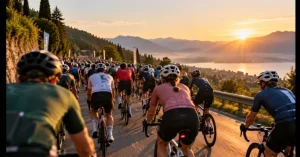
A gran fondo — Italian for “big ride” — is a long, mass-participation road cycle, usually somewhere between 100 and 160 km, often with a few serious climbs. It is not a race for most people who line up. It is a personal challenge: one long, beautiful day in the saddle that you train for so it feels like an achievement rather than an ordeal.
The honest truth is that almost any reasonably healthy adult can finish a gran fondo with a sensible gran fondo training plan and enough weeks to prepare. What separates a great day from a grim one is not raw talent — it is accumulated easy kilometres, one properly long weekend ride, a bit of structured intensity, and a fuelling plan you have actually rehearsed. This page walks you through all of it, whether this is your first century or you have ridden a few and want to go faster and hurt less.
Before you start, a quick reality check on where you are now. If you can already ride comfortably for 60 to 90 minutes without falling apart, you have the base to begin a structured plan. If you are newer than that, spend three or four weeks simply riding easy and often — three short rides a week — until an hour feels routine. Endurance training rewards patience; the riders who get injured or burn out are almost always the ones who tried to compress months of work into a few desperate weeks.
The distance
Finishing is about time in the saddle, not speed. A 100 km ride can take a new rider five hours or more. Your body needs to have practised being on the bike that long.
The climbing
Vancouver Island routes are rarely flat. A single long climb — the sort you meet on the Malahat — can define a day. Training teaches your legs to keep turning when the road tilts up.
The fuelling
Beyond about 90 minutes you cannot ride on willpower. Learning to eat and drink on the move is a trainable skill, and it is the one most first-timers neglect.
Pick your distance
Fondo distances, and what each one demands
“Gran fondo” covers a range of distances. Choose the one that matches your time to train and your experience — there is no shame in starting with a medio or a metric century and building up over a season or two.
Ride
Distance
Typical climbing
Who it suits
Longest training ride
Medio fondo
60–80 km
400–900 m
First structured event; busy schedules
~2.5–3 h
Metric century
100 km
700–1,400 m
The classic first goal for most riders
~3.5 h
Gran fondo
120–140 km
1,200–2,200 m
Riders with a solid base and 12+ weeks
~4 h
Imperial century
160 km (100 mi)
1,500–2,800 m
Experienced riders chasing a big milestone
~4.5–5 h
Notice that your longest training ride never needs to equal the full event distance. Done right, the last long ride plus fresh legs from a taper and the lift of a supported event day will carry you the rest of the way. Over-riding in training is a classic beginner error; it leaves you tired rather than ready.
Interactive · Plan builder
Build your gran fondo training plan
Choose your distance, how many weeks you have, and your experience. You will get a realistic weekly shape — how many rides, how long the long ride grows, and where the intensity and rest go.
Event distance
Weeks to train
Experience
A guide, not a prescription. Progress easy weeks before hard ones, take a rest day whenever your legs or sleep tell you to, and see a physician before starting if you have any health concerns.
How the plan works
Base, build, peak, taper — the four phases
Every sound endurance plan moves through the same four phases. Understanding them lets you adapt any plan to your own life rather than following a spreadsheet blindly.
Base (roughly weeks 1–4). This is where you build the aerobic engine that makes everything else possible. Almost all of it is easy, conversational Zone 2 riding, with weekly volume creeping up by no more than ten per cent. It feels too easy, and that is the point: you are teaching your body to burn fat efficiently and to recover quickly, laying down the foundation a fondo is built on. Resist the urge to turn every ride into a contest.
Build (roughly weeks 5–9). Now you add structure. One or two rides a week carry real intensity — tempo and threshold efforts that lift your sustainable pace — while the weekend long ride keeps stretching. Your body adapts to the specific demand of holding a strong, steady effort for hours. This is the phase where fitness visibly climbs, but it is also where overreaching creeps in, so keep one genuinely easy recovery week in every three or four.
Peak (roughly the final 3–4 weeks before taper). Training becomes event-specific. Long rides are at their longest, and you practise the exact things race day will ask of you: climbing at a sustainable effort, eating on the move, riding the last hour on tired legs. Your biggest long ride lands two to three weeks out from the event, not the week before.
Taper (final 1–2 weeks). You deliberately cut volume by around forty to fifty per cent while keeping a little sharpness with short efforts. It feels counter-intuitive — surely less training means less fitness? — but the fatigue drains away faster than the fitness does, and you arrive at the start line fresh, rested, and faster than you have ever been. Trust the taper. The work is already done.
What a typical week looks like. Once you understand the phases, a week almost arranges itself. A common and sustainable shape is a rest day after the weekend long ride, one or two easy endurance spins midweek, a single structured intensity session on a day when you are fresh, and then the long ride at the weekend. Keep the day before your long ride easy or off so you arrive with good legs. If life gets in the way — and it will — sacrifice a short weekday ride rather than the long ride or your rest day. Those two anchor everything else, and missing the occasional midweek session costs you almost nothing over a twelve-week block.
Treat recovery as part of the training, not a gap between it. Fitness is built while you rest, not while you ride; the hard session is only the stimulus. Sleep is the most powerful recovery tool you have, followed by eating enough to support the work you are asking of your body. If your resting heart rate is elevated, your sleep is poor, or your motivation has quietly drained away, those are signals to take an extra easy day — not weakness. Riders who listen to these signs train consistently for months; those who override them tend to get ill, injured, or burned out just when the event approaches.
From the ride journal
Latest training notes & route write-ups
Fresh articles on long rides, fuelling, climbing and the best roads on the Island. Read the blog →
If you only protected one session each week, it would be the weekend long ride. It is where your body learns the specific adaptation a fondo demands: hours of steady effort, burning fat, holding good position, and staying mentally engaged when the novelty wears off. Nothing else on the plan substitutes for it.
Grow it gradually. Add fifteen to thirty minutes most weeks, and every third or fourth week pull it back so your body absorbs the work. A ride that was daunting in week two becomes comfortable by week eight, not because you suffered more but because you repeated it patiently. Ride it in Zone 2 — easy enough to hold a conversation — for all but the final build weeks, when you can finish the last stretch at a firmer tempo.
Crucially, use the long ride to rehearse race day. Wear the kit you will wear. Eat on the schedule you plan to use. Ride some of the terrain you will face. By the time the event arrives, nothing should be a surprise — not the saddle time, not the food, not the feeling of pressing on when your legs have already done three hours of work.
Building the engine
Intervals, tempo and learning to climb
Easy miles build the base, but a little structured intensity is what lifts your sustainable speed so the fondo feels easier at any given effort. You do not need much — one, at most two, hard sessions a week is plenty alongside your endurance riding.
Tempo and sweet-spot. Blocks of ten to twenty minutes at a “comfortably hard” effort — you can speak only in short phrases — are the workhorse of fondo fitness. They raise the pace you can hold for hours without the deep fatigue of all-out intervals.
Threshold intervals. Shorter, harder efforts of five to twelve minutes near your one-hour limit push your ceiling up. Treat them with respect and always follow them with easy days.
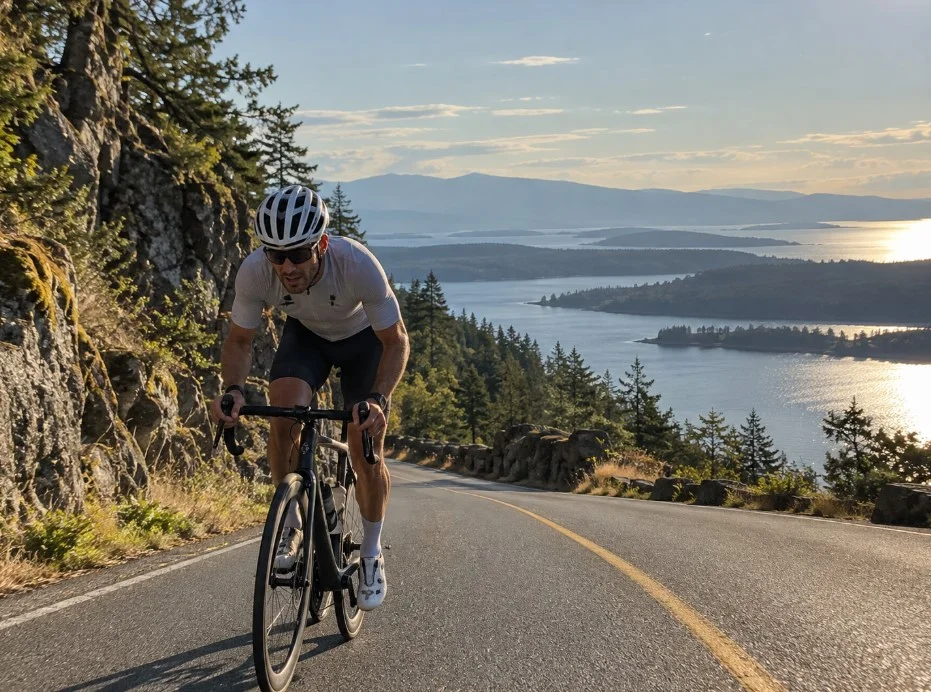
Climbing. On the Island, climbing is unavoidable, so make it a skill rather than a survival act. Practise settling into a steady, repeatable effort the moment the road tilts up, spinning a lower gear rather than grinding, and staying seated to save energy except on the steepest pitches. A climb ridden at an even effort costs far less than one attacked and then survived.
Train by feel or by numbers
The five training zones, in plain language
You do not need a power meter to train well. Every zone below has a “can you talk?” cue so you can pace it on feel alone, with heart-rate and power ranges for those who have them.
Z1
Recovery
Very easy, barely working. Full conversation. Spin the legs the day after a hard ride.
Z2
Endurance
Easy, all-day pace. You can talk in full sentences. This is 80% of your riding.
Z3
Tempo
Comfortably hard. Short phrases only. The sustainable fondo effort on long climbs.
Z4
Threshold
Hard, around your one-hour limit. A word at a time. Used in short intervals.
Z5
VO₂ max
Very hard, gasping. Used sparingly, for short sharp efforts late in a plan.
The single most common mistake amateur riders make is spending too much time in Zone 3 — riding their easy days too hard and their hard days too easy, so everything blurs into a tiring medium. Keep your easy rides genuinely easy and your hard efforts genuinely hard. That contrast, repeated over weeks, is what produces fitness. If you ride mostly by feel, the simplest rule holds: most rides should feel easy enough that you could happily keep going.
Interactive · Finish-time & fuel
Estimate your finish time and what to carry
Enter the route and your realistic average speed. You will get an estimated time in the saddle plus a sensible fuelling and hydration target — the two numbers most riders get wrong.
Distance (km)
Total climbing (m)
Average speed (km/h)
Fuelling style
Estimates only. A hilly profile, wind, heat and group riding all move the numbers. Build in extra time and extra food — running out of either is far worse than carrying a little spare.
Food, drink & the first hour
Fuelling, hydration and pacing the day
More fondos are ruined by poor fuelling and over-eager pacing than by a lack of fitness. Both are completely within your control, and both are trainable.
Eat early and keep eating. The mistake is waiting until you feel hungry or flat — by then it is too late to catch up. Start eating within the first thirty to forty-five minutes and keep a steady supply of carbohydrate coming: aim for somewhere around sixty grams an hour for most riders, rising towards ninety grams an hour on harder, longer days if your stomach is trained for it. That is the equivalent of a mix of energy bars, gels, bananas and drink mix — whatever your gut tolerates, which is exactly why you rehearse it on long rides.
Drink to a plan, not to panic. Roughly 500 to 750 millilitres of fluid an hour suits most riders in mild conditions, more in heat. Add electrolytes on long or hot days to replace what you lose in sweat. Dehydration quietly saps your power and your judgement long before you notice real thirst.
Pace the first hour like it is the last. Adrenaline and fresh legs make everyone start too fast. Ride the opening hour noticeably easier than feels natural, especially on early climbs, and you will have the strength to ride the back half strong — passing the riders who went out hard. The old wisdom holds: a fondo is won, or simply finished well, in the final quarter.
Bike & kit
The honest fondo kit list
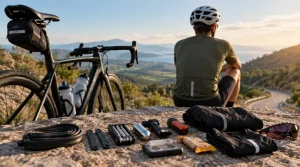
You do not need a boutique bike to finish a gran fondo. You need a well-fitted, mechanically sound machine and the handful of things that keep a long day from going wrong. A proper bike fit is the best money most riders can spend — comfort over four or five hours matters far more than a lightweight component.
Reliable road or gravel bike, recently serviced
Professional bike fit for all-day comfort
Helmet that fits well
Two bottles plus electrolyte mix
Spare tube, tyre levers, mini-pump or CO₂
Multi-tool and a quick-link for the chain
Enough food for the whole ride, plus spare
Layers for Island weather — a packable shell
Chamois cream for long saddle time
Lights, even for a daytime ride
Phone, ID and a little cash
Sunscreen and sunglasses
Where to ride
Training on Southern Vancouver Island
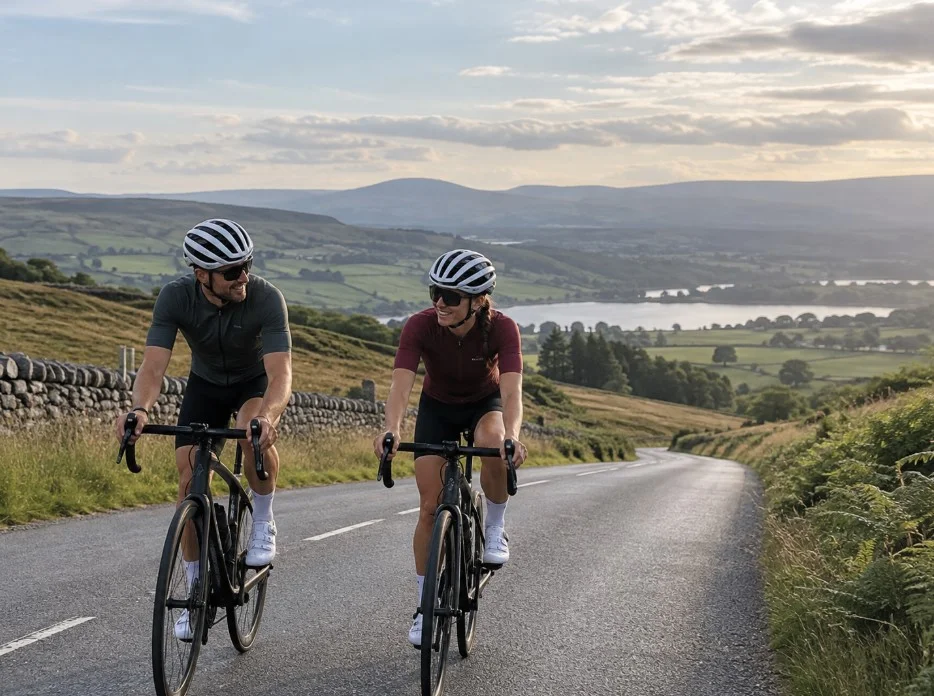
Few places are better suited to fondo training than Southern Vancouver Island. You can stack easy endurance hours on gentle rail-trail, find lung-busting climbs within an hour of Victoria, and link quiet coastal roads into loops of almost any length.
The Galloping Goose Regional Trail runs roughly 55 km from Victoria out towards Sooke, mixing paved and gravel surfaces, and is ideal for building long-ride time away from traffic. The Cowichan Valley Trail offers a long rail-trail loop with enough steady grades to keep it honest. For climbing, the Malahat is the classic test piece, and the Sooke Hills deliver sustained gradients that teach your legs what a fondo climb feels like. Quieter roads around Shawnigan Lake and the Cowichan Valley knit it all together.
Wherever you ride, check current road and trail conditions before you set out — surfaces on the rail trails and logging roads change with the seasons, and some links include unpaved stretches. Ride within the law, carry what you need to be self-sufficient, and always tell someone your route on a big day out.
Learn from others
The five mistakes first-timers make
1. Riding easy days too hard
The number-one error. When easy rides creep into tempo, you arrive at hard sessions tired and never truly recover. Keep easy easy.
2. Skipping the long ride
Weekday rides are convenient; the long ride is essential. If something has to go, cut a short session, never the long one.
3. Never practising fuelling
Race day is the worst time to discover a gel upsets your stomach. Rehearse exactly what and when you will eat.
4. Cramming the last weeks
Panic training in the final fortnight only adds fatigue. The fitness is already banked — let the taper reveal it.
5. Going out too fast
Fresh legs lie. Start conservatively, especially on early climbs, and save something for the final quarter.
Do this instead
Ride mostly easy, protect one long ride, add a little intensity, rehearse your fuel, taper, and pace the first hour with discipline.
Questions riders ask
Gran fondo training, answered
How many weeks do I need to train for a gran fondo?
For a 100 km metric century, most first-timers do well with 12 to 16 weeks if they can already ride comfortably for 60 to 90 minutes. Eight weeks is enough to go from a solid base to a medio or metric century, while longer or hillier events reward 16 weeks. More weeks lets you build slowly and absorb the work — which lowers your risk of injury and burnout.
How far should my longest training ride be?
Your longest ride does not need to match the event. For a 100 km fondo, a peak long ride of around 3.5 hours (roughly 75–85 km) is plenty; for a 160 km century, aim for 4.5 to 5 hours. Taper-fresh legs and the lift of event day carry you the rest of the way. Schedule that biggest ride two to three weeks before the event, not the week before.
How many hours a week should I train?
Most amateur riders prepare well on five to eight hours a week: two or three shorter weekday rides plus one weekend long ride. You can finish a metric century on less if the long ride is protected, and more experienced riders chasing a fast century may ride eight to ten hours. Consistency over the weeks matters far more than any single big week.
Do I need a power meter or heart-rate monitor?
No. You can train effectively entirely by feel using the “can you talk?” test — easy rides let you hold a full conversation; hard efforts cut you to a word or two. A heart-rate monitor adds useful feedback and a power meter more still, but neither is required to finish a fondo strong. Buy fitness with consistent riding first; buy data later if you want it.
How much should I eat and drink during the ride?
Aim for roughly 60 grams of carbohydrate an hour for most riders, rising towards 90 grams an hour on harder, longer days if your stomach is trained for it, and start eating within the first 45 minutes. For fluid, 500 to 750 millilitres an hour suits mild conditions, more in heat, with electrolytes on long or hot days. Rehearse your exact food and timing on training rides so nothing is new on event day.
How do I pace a hilly fondo?
Ride the first hour noticeably easier than feels natural, and climb at a steady, repeatable effort rather than attacking. Spin a lower gear, stay seated to save energy except on the steepest pitches, and keep eating and drinking on the climbs and descents. Discipline early leaves you strong for the final quarter, where a well-paced ride is finished well.
Can a complete beginner finish a gran fondo?
Yes — most people can, with enough runway. If an hour on the bike is not yet comfortable, spend three or four weeks riding easy and often before starting a structured plan, then give yourself 12 to 16 weeks and begin with a medio or metric century. The limiter is almost never talent; it is patient, consistent preparation and a rehearsed fuelling plan.
What should I do in the final week before the event?
Taper. Cut your training volume by around 40 to 50 per cent while keeping a few short, sharp efforts so your legs stay sharp. Sleep well, eat normally with a little extra carbohydrate in the last day or two, service and check your bike, lay out your kit and food the night before, and resist the urge to cram in last-minute training — it only adds fatigue.
One good day in the saddle
Build the plan that gets you to the line
Set your distance, your weeks and your experience, and turn “I could never” into a finish you will remember.