What to Wear for a Rainy Gran Fondo on Vancouver Island

12 min read
Contents
- Dressing for four wet hours is not the same as dressing for a commute
- Rain, wind and effort affect comfort differently
- Why overheating can be as uncomfortable as getting wet
- Build your clothing system from the inside out
- Base layers that manage moisture
- Warmth versus wind protection
- Waterproof shells and breathability limits
- What to wear at different temperatures
- Cool rain around 5–10°C
- Unsettled conditions around 10–15°C
- Mild rain above 15°C
- Your hands, feet and visibility deserve attention
- Gloves and braking control
- Socks, shoe covers and wet feet
- Lights and visibility in poor weather
- Adjust your clothing before the descent
- The danger of stopping in damp clothing
- What to keep within easy reach
- When the weather should change your ride plan
- A three-scenario Vancouver Island clothing checklist
- Dry summer morning with a cool start
- Unsettled spring or autumn weather
- Prolonged cold rain
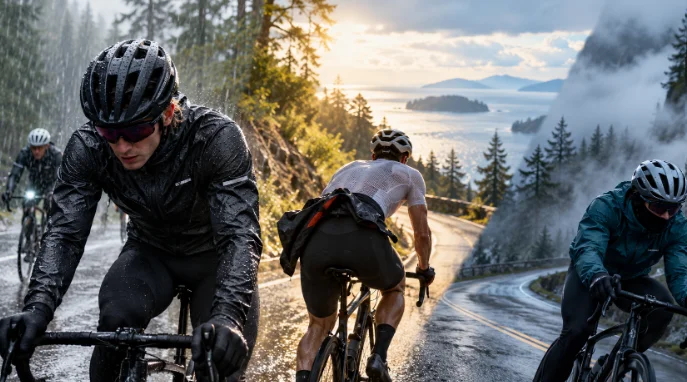
A rainy gran fondo can begin with cold hands in Victoria, turn uncomfortably warm on a long climb and leave you shivering on the descent. Dressing for that kind of ride isn’t simply a matter of buying a waterproof jacket. You need clothing that manages moisture, blocks wind when necessary and lets you adjust your temperature without stopping every few kilometres.
For a four- to six-hour ride on Vancouver Island, a few adaptable layers usually work better than one heavily insulated outfit. The trick is knowing which layers to wear, which to carry and when to change them.
Dressing for four wet hours is not the same as dressing for a commute
A 20-minute commute offers a fairly predictable period of exposure. A 100 km gran fondo is different: you’ll generate heat while climbing, cool down during descents and potentially spend several hours in clothing that has absorbed rain or perspiration.
Southern Vancouver Island adds another complication. Conditions around Victoria can differ from those on more exposed coastal roads or inland hills. Environment and Climate Change Canada’s climate normals show how temperatures change through the seasons, but a monthly average cannot tell you what the weather will be along an entire cycling route.
Rain, wind and effort affect comfort differently
Rain makes clothing wet, while moving air increases heat loss. On a bicycle, your speed adds to the airflow around your body, which becomes especially noticeable on descents and exposed sections.
Climbing creates the opposite problem. Even at 10°C, a sustained uphill effort can make a thermal jersey and waterproof shell feel excessive. Once you stop climbing, the perspiration trapped underneath those layers can leave you cold.
This is why a temperature forecast alone is insufficient. Check wind direction, expected rainfall, exposed sections and the time you expect to spend riding. A breezy 10°C morning with continuous rain demands different clothing from a calm 10°C morning with occasional showers.
Why overheating can be as uncomfortable as getting wet
A waterproof jacket may prevent rain from reaching your jersey while still allowing perspiration to accumulate inside. If moisture builds faster than the garment can release it, you’ll feel damp despite the waterproof fabric doing its job.
Start with enough clothing to warm up comfortably through gentle riding, rather than enough to feel completely warm while standing motionless at the start. In sustained cold rain, however, don’t deliberately underdress and expect hard riding to compensate.
Use zippers and ventilation early. Opening a jacket before you become sweaty is more effective than trying to dry out after the moisture has accumulated.
Build your clothing system from the inside out
For most wet-weather road rides, think in three functions: moving moisture away from your skin, providing warmth when needed and protecting against wind and rain. You won’t necessarily need three separate garments every time.
Base layers that manage moisture
A lightweight synthetic or merino-blend base layer can help manage perspiration beneath your jersey. Synthetic fabrics generally dry quickly, while merino blends can offer a comfortable balance of moisture management and insulation.
Avoid cotton next to your skin during prolonged cold, wet riding. Once saturated, it tends to remain damp and can contribute to uncomfortable cooling.
Fit matters as much as fabric. A base layer should sit comfortably beneath your jersey without bunching around the shoulders or creating pressure points in your riding position.
Warmth versus wind protection
A thermal cycling jersey adds insulation. A windproof gilet reduces airflow over your torso without covering your arms. These solve different problems.
For a cool but mostly dry morning, a regular jersey with arm warmers and a gilet may provide enough flexibility. When temperatures are lower or persistent rain is expected, a thermal layer beneath a suitable shell becomes more useful.
Removable arm warmers and knee warmers are particularly practical for changing conditions. They allow small adjustments without carrying an entire second cycling outfit.
Choose clothing that fits securely and doesn’t restrict movement, particularly when you’re reaching the brake hoods or riding in the drops.
Waterproof shells and breathability limits
A cycling rain shell should provide dependable weather protection without becoming excessively bulky or difficult to ventilate. Useful features include taped seams, a protective collar, adjustable cuffs and a longer rear panel that covers your lower back in the riding position.
Water-resistant jackets may handle brief showers but are not necessarily suitable for hours of steady rain. Waterproof membranes offer stronger protection, although breathability varies with fabric construction, ventilation and conditions.
A more expensive jacket isn’t automatically the right choice. A reasonably fitted waterproof shell you already own may work for occasional rides, provided it doesn’t flap excessively, interfere with steering or obstruct access to your pockets.
For regular long rides in wet weather, cycling-specific fit, effective ventilation and packability are often worth prioritising over additional insulation.
What to wear at different temperatures
The following combinations are starting points for steady endurance riding, not fixed rules. Wind, rainfall, personal cold tolerance and riding intensity can all change what feels comfortable.
| Conditions | Upper body | Legs | Hands and feet | Useful extra |
|---|---|---|---|---|
| 5–10°C, cool rain | Moisture-managing base layer, thermal jersey and waterproof shell | Full-length cycling tights or suitable thermal leg coverage | Insulating full-finger gloves, warm socks and weather-resistant overshoes | Thin helmet-compatible cap or headband |
| 10–15°C, unsettled weather | Regular or lightweight thermal jersey, removable arm warmers and packable rain shell | Bib shorts with knee warmers or lightweight tights | Full-finger gloves and optional toe covers or overshoes | Lightweight gilet for exposed descents |
| Above 15°C, mild rain | Lightweight jersey with a breathable rain shell when needed | Regular cycling shorts | Light gloves if preferred and quick-drying socks | Compact shell for heavier showers |
Cool rain around 5–10°C
This combination requires particular care because prolonged moisture and wind can gradually overwhelm inadequate clothing. Start with a suitable insulating layer and a wind-blocking waterproof shell. Warm gloves, adequate leg coverage and protection for your feet become more important as the ride gets longer.
HealthLink BC advises that hypothermia can occur in wet and windy weather even when air temperatures are above 10°C. That doesn’t mean every cool-weather ride is dangerous, but it does mean that persistent shivering or difficulty staying warm should never be ignored.
If you’re unfamiliar with riding for hours in these conditions, a shorter supported route may be more sensible than committing to an exposed 100 km course.
Unsettled conditions around 10–15°C
This is where removable layers are especially useful. A lightweight jersey, arm warmers and packable shell offer flexibility when the forecast alternates between showers and dry periods.
For example, you might leave Victoria wearing arm warmers and a windproof layer, remove the outer layer during a sustained climb and put it back on before an exposed descent.
If rain is expected throughout the ride rather than intermittently, choose more dependable waterproof protection. The same temperature can feel considerably colder once your clothing is saturated.
Mild rain above 15°C
In warmer rain, overheating may become the bigger challenge. A lightweight jersey with a thin, ventilated shell is often more practical than a thermal outfit.
You may not need waterproof tights or heavily insulated gloves. Instead, prioritise comfortable handling, breathable clothing and a dry layer for unexpected cooling during stops.
Remember that warm rain at the start doesn’t guarantee comfortable conditions several hours later, particularly if the route includes exposed terrain or the temperature is forecast to fall.
Your hands, feet and visibility deserve attention
A dry torso doesn’t help much if your fingers become too cold to operate the brakes comfortably. Hands, feet and visibility deserve separate consideration because they directly affect control and safety.
Gloves and braking control
Choose gloves that allow you to operate both brakes and shift gears confidently. Thick insulation may provide warmth but reduce dexterity, while thin gloves may become uncomfortable during prolonged cold rain.
Test your gloves in the riding position before an event. Check whether wet fabric slips against the brake levers and whether you can comfortably reach the controls.
For a long, unsupported wet-weather ride, a spare dry pair in a waterproof pouch can be useful. It takes little space compared with the discomfort of spending the final hours with cold, saturated gloves.
Socks, shoe covers and wet feet
Cycling shoes frequently have ventilation openings, so rain and road spray can reach your socks quickly. Overshoes or toe covers provide additional wind and water protection, although they cannot guarantee completely dry feet.
Water can still enter through ankle openings, cleat holes or the top of the shoe. Weather-resistant overshoes are therefore best understood as protection that delays wetting and reduces wind exposure, rather than an absolute waterproof seal.
Wear socks that manage moisture and avoid excessively thick combinations that make your shoes tight. Restricted circulation can make cold feet harder to manage.
If you have money for only one wet-weather upgrade, think about which problem currently limits your riding. Cold fingers that interfere with braking deserve attention before cosmetic improvements to your rain outfit.
Lights and visibility in poor weather
Rain reduces contrast and makes cyclists harder to notice against grey roads, vehicles and roadside surroundings. Bright clothing, reflective details and working lights can improve conspicuity, particularly in low light.
British Columbia’s Motor Vehicle Act requires specific front and rear lighting equipment for cycling during the legally defined night-time period. ICBC also recommends preparing for poor weather and low-light conditions.
Using suitable front and rear lights during gloomy daytime rain is a sensible additional precaution, even where the night-time lighting requirement does not apply.
Keep lights unobstructed by jackets, bags or mudguards. Check their battery life before a long ride, and don’t rely on bright clothing as a substitute for proper positioning and road awareness.
Adjust your clothing before the descent
A long climb can make you feel warm enough to unzip or remove a layer. The mistake is waiting until you’re already descending at speed to realise how quickly you’ve cooled down.
Before a prolonged descent, stop somewhere safe if you need to close vents, put on a gilet or adjust gloves. Don’t attempt complicated clothing changes while riding in a group or navigating a technical section.
The danger of stopping in damp clothing
During a climb, your body produces considerable heat. At a feed station, that heat production falls while your damp clothing remains exposed to cool air.
A short stop can become unpleasant if you stand around in wet kit without additional protection. Put on a shell before cooling excessively, and avoid unnecessary delays in exposed locations.
If you develop persistent shivering, unusual clumsiness, confusion or difficulty concentrating, stop riding and seek shelter and assistance. These can be warning signs of significant cold exposure, not simply normal endurance fatigue.
What to keep within easy reach
Store your most frequently used layer in a jersey pocket or easily accessible bag. A tightly packed jacket buried beneath repair equipment is inconvenient when the rain suddenly intensifies.
For variable conditions, the most useful combination is often one adjustable outer layer and one small removable accessory, such as arm warmers or a thin headband.
Try the arrangement on a shorter training ride. You should know where everything is before attempting to manage it during a crowded gran fondo.
When the weather should change your ride plan
Suitable clothing makes ordinary rain more manageable, but it cannot make every weather condition appropriate for cycling. The decision to continue should account for visibility, wind, road surfaces and your ability to remain warm and in control.
Check Environment and Climate Change Canada forecasts and active weather alerts before departure. For organised events, follow the organiser’s current instructions, including any route changes, delays or cancellations.
Use three levels of decision-making:
- Ride as planned: Light or moderate rain, manageable wind, adequate visibility, safe road conditions and clothing you’ve already used comfortably.
- Shorten or modify the route: Prolonged rain, increasing wind, deteriorating visibility or uncertain conditions on exposed sections. Choose roads with suitable shelter and practical options to return early.
- Postpone or stop: Severe weather warnings affecting the route, lightning, unsafe crosswinds, flooding, suspected ice, dangerously poor visibility or cold exposure that you cannot manage safely.
Wet painted road markings, metal covers, leaves and loose debris can reduce traction. Allow more room for braking and cornering, particularly on unfamiliar descents. Never ride into floodwater to discover how deep it is.
On Vancouver Island, route choice matters as much as clothing. A loop close to Victoria with several return options presents a different commitment from a remote ride where the only way home is to continue for another hour.
Clothing is only one part of the decision. planning your first gran fondo from start to finish also means checking the course, support arrangements and event instructions before deciding how to approach difficult conditions.
For a training ride, there’s no meaningful benefit in completing the planned distance at the expense of safety. Moving the session indoors or reducing the distance is a reasonable adjustment, not a failed workout.
A three-scenario Vancouver Island clothing checklist
Before your next long ride, match your kit to the likely conditions rather than packing for every possible forecast.
Dry summer morning with a cool start
- Regular cycling jersey and bib shorts.
- Lightweight arm warmers or a packable gilet if needed.
- Normal cycling socks and comfortable gloves.
- Compact shell only if the forecast or route justifies it.
- Sunscreen and working lights.
This is the simplest setup. Avoid unnecessary insulation once temperatures rise.
Unsettled spring or autumn weather
- Moisture-managing base layer and adaptable jersey.
- Packable waterproof shell with usable ventilation.
- Arm or knee warmers according to temperature.
- Full-finger gloves and optional shoe covers.
- Lights, waterproof phone storage and an accessible spare layer.
This setup offers the most flexibility for changing conditions between coastal roads, climbs and descents.
Prolonged cold rain
- Suitable thermal base layer and insulating jersey.
- Waterproof, wind-blocking outer shell.
- Full-length leg coverage appropriate to the conditions.
- Warm, weather-resistant gloves and protective overshoes.
- Dry backup essentials, reliable lights and a confirmed route to shelter.
This final setup should be reserved for conditions within your experience and equipment limits. If the forecast presents a genuine safety concern, additional clothing is not a reason to proceed.
A rainy gran fondo doesn’t require a wardrobe full of specialist equipment. It requires a clothing system you understand: enough protection to stay comfortable when the pace drops, enough ventilation to avoid overheating on climbs and the flexibility to adjust before conditions become a problem. Test those combinations during training, and the weather becomes one more part of the ride you can manage rather than an unpleasant surprise.